
GIU is an extraordinary place for learning, discovery and transformation. Here, you have the freedom to ask questions, challenge the ordinary and spark innovation. We seek out bright and curious minds with revolutionary ideas to create an empowering community of leaders and change makers.
 22 Nov 2025
Mental Health & Well-being Tips for University Students
University life is often described as one of the most exciting and transformative phases in a student’s life. It brings opportunities for personal growth, independence, and academic exploration. However, it can also be overwhelming at times, filled with challenges such as academic pressure, social expectations, financial worries, and uncertainty about the future. All these factors can significantly impact a student’s mental health and overall well-being.
Maintaining good mental health is just as important as achieving academic success. By adopting healthy habits, developing coping strategies, and seeking support when needed, university students can lead a balanced and fulfilling life. Here are some practical mental health and well-being tips to help students thrive during their university journey.
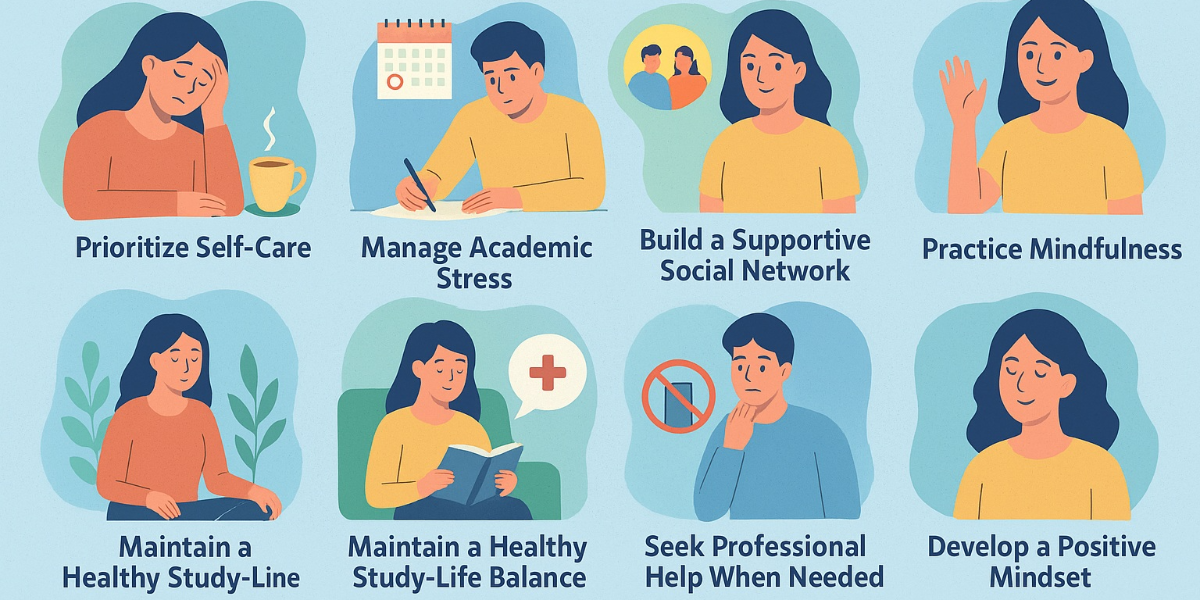
1. Prioritize Self-Care
Self-care is the foundation of good mental health. It involves taking time to rest, relax, and recharge both physically and emotionally.
Tips for Effective Self-Care:
- Get enough sleep: Aim for 7–8 hours of quality sleep each night to improve focus and mood.
- Eat balanced meals: Include fruits, vegetables, and whole grains to maintain energy levels.
- Stay hydrated: Dehydration can affect concentration and mood.
- Take breaks: Avoid overworking yourself—take short breaks between study sessions to prevent burnout.
When students take care of their bodies, their minds also function more effectively, leading to better academic performance and emotional resilience.
2. Manage Academic Stress
Academic pressure is one of the leading causes of stress among university students. Deadlines, exams, and high expectations can cause anxiety and self-doubt.
Ways to Manage Academic Stress:
- Plan ahead: Use a planner or digital calendar to track assignments and exams.
- Break tasks into smaller steps: This makes large projects more manageable.
- Avoid procrastination: Create a study schedule and stick to it.
- Ask for help: Don’t hesitate to reach out to professors, tutors, or classmates when you’re struggling.
Remember, seeking help is a sign of strength—not weakness. Managing your workload efficiently can prevent unnecessary stress and promote better learning outcomes.
3. Build a Supportive Social Network
Social connections are essential for emotional well-being. Being part of a supportive community helps reduce feelings of loneliness and isolation.
How to Build Healthy Connections:
- Join university clubs and societies: Meet like-minded people and make new friends.
- Stay connected with family and old friends: Regular communication can provide emotional comfort.
- Seek out positive friendships: Surround yourself with people who motivate and support you.
- Volunteer or participate in group activities: Helping others can boost self-esteem and happiness.
A strong support system provides emotional stability and helps you navigate difficult times more easily.
4. Practice Mindfulness and Relaxation Techniques
Mindfulness is about being present and aware of your thoughts, emotions, and surroundings without judgment. It’s a proven way to reduce stress and improve mental well-being.
Mindfulness Practices for Students:
- Meditation: Spend a few minutes daily focusing on your breath to calm your mind.
- Deep breathing exercises: Useful during stressful moments or before exams.
- Yoga or stretching: Helps release tension and improve concentration.
- Journaling: Write down your thoughts and feelings to gain clarity and self-awareness.
These practices enhance self-control, reduce anxiety, and help students stay grounded amid academic and personal challenges.
5. Maintain a Healthy Study-Life Balance
University life should not be all about studying—it’s equally important to make time for fun, relaxation, and self-expression. A healthy study-life balance prevents exhaustion and improves overall happiness.
Tips to Maintain Balance:
- Set boundaries: Allocate specific hours for study and relaxation.
- Engage in hobbies: Spend time doing activities you enjoy, such as reading, painting, or sports.
- Exercise regularly: Physical activity boosts endorphins, reducing stress and improving mood.
- Spend time outdoors: Fresh air and sunlight enhance mental clarity and positivity.
Balancing academics with leisure ensures you stay productive without feeling overwhelmed.
6. Seek Professional Help When Needed
Sometimes, despite your best efforts, you might find yourself struggling emotionally. Seeking professional help from a counselor or psychologist can make a huge difference.
When to Seek Help:
- Persistent sadness or loss of interest in activities
- Difficulty sleeping or concentrating
- Feeling anxious or overwhelmed
- Experiencing thoughts of hopelessness or self-harm
Most universities, including Green International University (GIU), provide access to student counseling services and mental health support programs. Talking to a professional can help you gain perspective and develop healthy coping mechanisms.
7. Limit Social Media and Digital Overload
While technology connects us, excessive screen time can negatively affect mental health. Constant exposure to social media can lead to comparisons, anxiety, and distraction from studies.
Healthy Digital Habits:
- Set daily screen time limits.
- Avoid using your phone during study hours and before bedtime.
- Follow pages that promote positivity and mental health awareness.
- Take occasional social media breaks to recharge mentally.
By controlling digital habits, students can stay focused, reduce stress, and enjoy more meaningful real-life interactions.
8. Develop a Positive Mindset
A positive attitude plays a vital role in maintaining mental health. Challenges are inevitable, but how you respond to them determines your emotional well-being.
Ways to Foster Positivity:
- Practice gratitude: Reflect daily on things you are thankful for.
- Focus on progress, not perfection: Celebrate small achievements.
- Avoid negative self-talk: Replace “I can’t do this” with “I’ll do my best.
- Set realistic goals: Achievable goals boost motivation and confidence.
Developing resilience and optimism helps students face university life with strength and determination.
9. Participate in Campus Activities
Engaging in extracurricular activities is an excellent way to stay mentally healthy. It promotes social interaction, teamwork, and a sense of belonging.
Benefits of Campus Involvement:
- Reduces stress through active engagement
- Builds leadership and communication skills
- Enhances time management abilities
- Creates lasting friendships and networks
GIU encourages students to participate in clubs, events, and workshops that contribute to both personal growth and mental well-being.
10. Remember: You’re Not Alone
Every student experiences stress, anxiety, or moments of self-doubt at some point. It’s important to remember that you are not alone in your journey. Reaching out for help, connecting with others, and prioritizing mental health can make all the difference.
At Green International University, mental health awareness is an essential part of campus life. The institution promotes a healthy, inclusive, and supportive environment where students can excel academically while maintaining emotional balance.
Conclusion
University life can be both exciting and demanding, but maintaining good mental health ensures you make the most of this transformative experience. By practicing self-care, stress management, social connection, and mindfulness, students can lead happier, healthier, and more successful lives.
Remember, your mental health is a lifelong priority—not just during exams or stressful times. Take care of your mind, nurture your well-being, and you’ll be better equipped to achieve your goals and enjoy your university journey to the fullest.