GIU is an extraordinary place for learning, discovery and transformation. Here, you have the freedom to ask questions, challenge the ordinary and spark innovation. We seek out bright and curious minds with revolutionary ideas to create an empowering community of leaders and change makers.
 26 Dec 2025
Multi-Agency Security Mock Exercise at Green International University
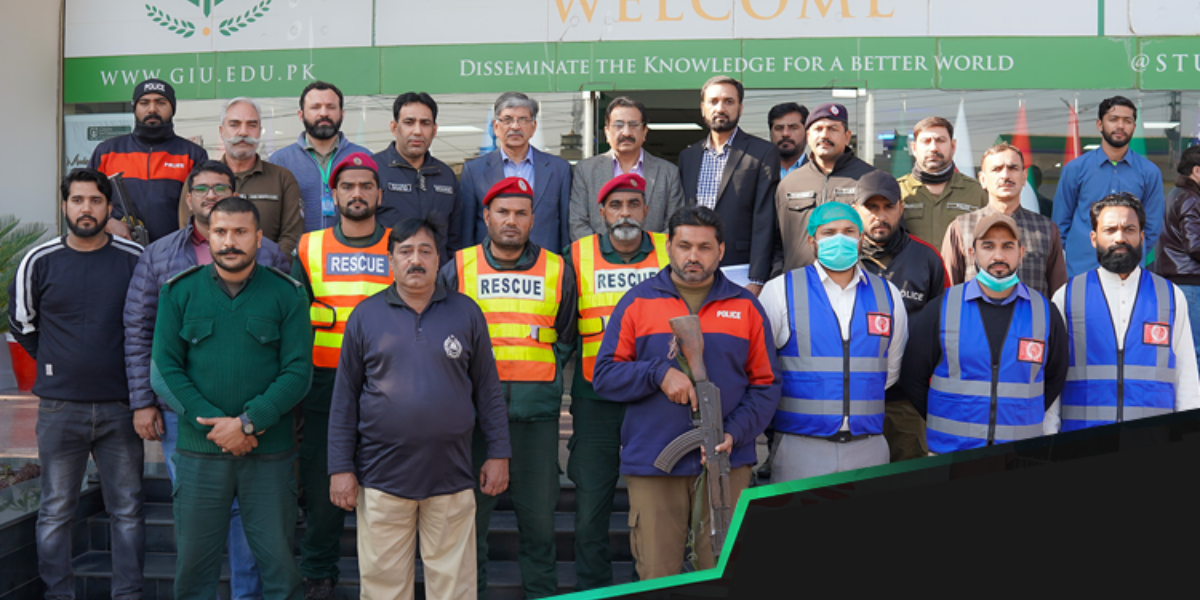
Green International University (GIU) successfully conducted a comprehensive Multi-Agency Security Mock Exercise on its campus, marking an important milestone in the university’s ongoing commitment to safety, preparedness, and institutional resilience. The exercise was designed to evaluate emergency response mechanisms, strengthen coordination among relevant agencies, and ensure that the university community remains well-protected against potential security challenges.
In today’s rapidly changing security environment, educational institutions face increasing responsibility to prepare for a wide range of emergencies. Recognizing this reality, GIU took a proactive step by organizing a large-scale mock exercise that simulated real-life emergency conditions and required coordinated action from multiple departments and external agencies.
Purpose and Importance of the Mock Exercise
The primary purpose of the multi-agency mock exercise was to test the effectiveness of existing security protocols and emergency response plans. Such exercises play a crucial role in identifying gaps, improving operational readiness, and ensuring that all stakeholders understand their roles during a crisis.
By recreating a realistic emergency scenario, the university aimed to assess how quickly and efficiently response teams could mobilize, communicate, and act under pressure. The exercise also helped evaluate decision-making processes, resource allocation, and the ability to manage complex situations in a controlled yet challenging environment.
Beyond testing procedures, the exercise served as an educational opportunity for students, faculty, and staff. It raised awareness about safety practices, emergency reporting mechanisms, and the importance of remaining calm and cooperative during critical situations.
Participation of Multiple Agencies
A defining feature of the exercise was the involvement of multiple security and emergency response agencies. This multi-agency participation ensured a holistic approach to campus safety and allowed different organizations to work together in a coordinated manner.
Law enforcement units played a central role in securing the area, assessing threats, and managing the simulated incident. Emergency medical services were responsible for providing immediate care, triage, and evacuation of affected individuals. Civil defense teams contributed by demonstrating rescue operations, crowd management techniques, and fire-related response measures. Specialized units, including bomb disposal and crime scene teams, showcased their expertise in handling sensitive and high-risk situations.
The presence of these agencies reinforced the importance of collaboration and mutual understanding. Real emergencies rarely involve a single department, and exercises like this help ensure that all responders can function as a unified force.
Scenario Design and Execution
The mock exercise was carefully planned to reflect realistic challenges that could arise in a university setting. The scenario required swift action, clear communication, and strict adherence to established protocols. Participants were expected to respond as they would in an actual emergency, making the drill both practical and instructive.
The exercise began with the identification of a simulated threat, followed by the activation of emergency response systems. Security personnel secured the premises, while response teams assessed the situation and initiated appropriate actions. Rescue and medical teams treated mock casualties, demonstrating emergency care procedures and evacuation techniques.
Throughout the exercise, observers monitored each stage to evaluate performance, coordination, and compliance with safety standards. This structured approach ensured that valuable insights could be gathered for post-exercise analysis.
Role of University Administration and Security Staff
The university administration played a key role in facilitating the exercise. From planning and coordination to execution and evaluation, GIU’s leadership ensured that the event was conducted smoothly and safely.
Campus security staff worked closely with external agencies, acting as a bridge between the university and response teams. Their familiarity with the campus layout, access points, and student movement patterns proved essential in managing the simulated emergency effectively.
The exercise also highlighted the importance of internal preparedness. University departments reviewed their communication channels, emergency notifications, and support systems to ensure they aligned with broader security objectives.
Awareness and Learning for Students and Staff
One of the most significant outcomes of the mock exercise was the heightened awareness it created among students and staff. Observing the drill allowed members of the university community to better understand how emergencies are handled and what is expected of them during such situations.
Students gained insight into evacuation procedures, assembly points, and the importance of following instructions from authorities. Faculty and staff were reminded of their responsibilities in guiding students, maintaining order, and ensuring safety within their respective areas.
By involving the university community in the process, GIU fostered a culture of shared responsibility and vigilance. Preparedness is not solely the duty of security personnel; it requires cooperation and awareness from everyone on campus.
Evaluation and Key Takeaways
Following the exercise, a detailed evaluation was conducted to assess overall performance. Strengths were identified, including effective inter-agency communication, timely responses, and adherence to protocols. At the same time, areas for improvement were noted to enhance preparedness further.
These evaluations are critical for refining emergency plans and ensuring continuous improvement. Feedback from participating agencies and university representatives will be used to update procedures, conduct additional training, and strengthen coordination mechanisms.
The exercise reaffirmed that regular drills and simulations are essential components of a robust security strategy. They not only test systems but also build confidence among responders and the wider community.
Commitment to a Safe and Secure Campus
The successful conduct of the multi-agency security mock exercise reflects Green International University’s strong commitment to providing a safe and secure learning environment. By investing time and resources in preparedness initiatives, the university demonstrates its dedication to the well-being of its students, faculty, and staff.
Security challenges continue to evolve, and institutions must remain vigilant and adaptable. GIU’s proactive approach sets a positive example for other educational institutions, highlighting the importance of collaboration, planning, and continuous improvement in campus safety.
Conclusion
The Multi-Agency Security Mock Exercise at Green International University was a significant step toward strengthening emergency preparedness and fostering a culture of safety. Through realistic simulations, effective collaboration, and active participation, the exercise achieved its objectives and provided valuable learning opportunities for all involved.
By regularly conducting such initiatives and building strong partnerships with emergency response agencies, GIU ensures that it remains prepared to handle unforeseen situations. Ultimately, these efforts contribute to a secure academic environment where learning and innovation can thrive without compromise.